Steamboats, Summer Money, and Millionaires' Row
Two nineteenth-century inventions shape the shoreline you see today: the steam excursion and the fortune that bought a cottage big enough to need staff.
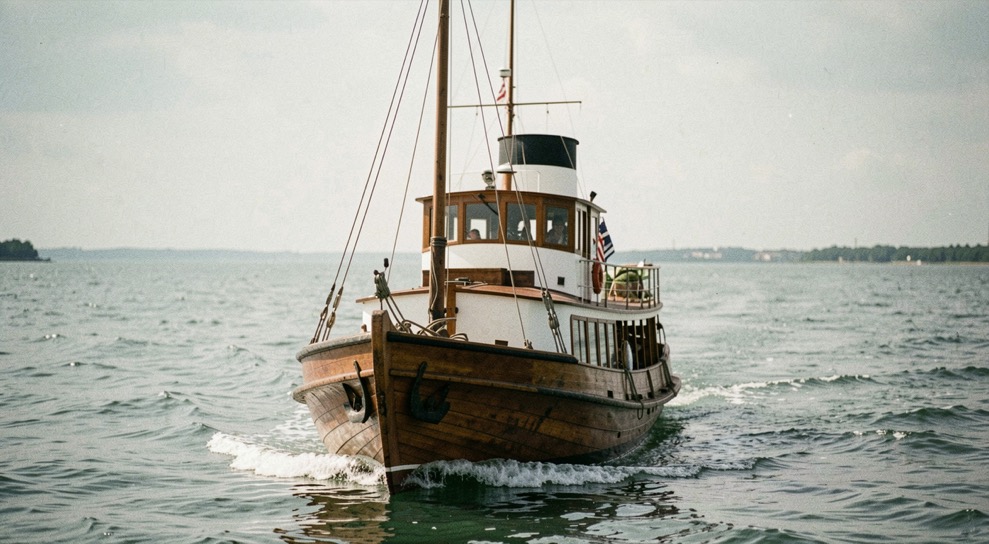
Stand at the village seawall and watch a white paddlewheeler back away from its dock, whistle going, and you are watching the oldest continuous habit on this lake. Regular steam service began here in the early years of the republic, when a charter was granted in 1817 and vessels with names borrowed from river legends took over the passenger run. Within a few decades the run had stopped being transportation and started being theater.
The steam era mattered because it put the middle of the lake on display. Sail and oar kept visitors near landings; steam carried them under the bluffs and past the islands in comfort, selling the scenery itself as the attraction. That single change explains nearly everything else downstream: the hotels that followed the whistles, the photographers who followed the hotels, and eventually the cottages.
Millionaires Row appears
In the last quarter of the nineteenth century, industrial families from New York and Philadelphia discovered that a summer cottage beside cool water outperformed any city house in August. Along the eastern shore between the village and Bolton Landing, estates went up in quick succession with shingle style porches deep enough for forty chairs. Newspapers of the era called the stretch Millionaires Row, and the name held even after later fires, subdivisions, and lodge conversions thinned the original roster.
The social logic was quietly ruthless. Estates faced the water, backed onto carriage roads, and communicated as much through lawn crews and yacht flags as through visits. Yet the row also funded good things: boathouse architecture worth studying, trail easements that survived into public hands, and a preservation instinct that later protected viewsheds most towns would have paved. If weathered timber outbuildings appeal to you more than grand facades, drift over to our piece on great camps and their architecture.
First came the steam whistle, then the sawmills, then the porch columns. The shoreline reads left to right like a ledger of who wanted what from the water.
Deck log entry
Riding the tradition today
The excursion habit never died out here. Modern paddle vessels carry the theme forward each season, offering round trips out of the village that trace exactly the corridor the earlier steamers worked. Deck seating fills fast on weekend afternoons in July; locals favor the first morning sailing, when fog still sits on the narrows and the water shows no wake but yours. Pairing a cruise with the shoreline outlooks in the Prospect Mountain drive gives you both scales of the lake in one day.
For a fuller stay built around these rhythms, see what we suggest in the restored lodging overview at where to stay around the lake, then browse the seasonal calendars collected in our Trip Guides desk.
Why the boats kept running
Persistence deserves its own explanation. Railroads arrived on both ends of the lake within a generation of the first steamer, yet the boats never lost their job description, because the shoreline they serve has no parallel road. To follow the water north by rail means a detour through another county; by boat it is an afternoon of vertical bluffs and estate lawns unavailable any other way. Scenery with a monopoly protects the monopoly service.
The flotilla evolved accordingly, slimming from dozens of workaday packets to a handful of excursion vessels with room enough to dance. What was freight became ritual: the mail boat wave, the flag signals between landings, the closing-trip horn that older residents still claim to date summers by. Wooden hulls gave way to steel without anyone surrendering the paint scheme, which tells you who the real custodian of tradition is.
The railroad could go around the lake. The steamer understood that the point was not getting there.
Dockside conversation
Readers tracing the hotel side of this ledger will find it continued under the restored lodging overview, where resort tiers descended directly from these landing economies.